A Single Score Mixes Unrelated Use Cases
Third-party IP scores are designed for e-commerce fraud, email spam, or DDoS filtering—not Claude account reviews. Without a calibrated model, no third-party score can be converted into a Claude ban percentage.
Read Raw Dimensions Instead of Composite Scores
Inspect explicit network usage types, boolean proxy flags, per-list DNSBL statuses, and BGP route origins along with their timestamps. When providers disagree, keep both results visible.
Distinguish "Not Listed" from "Unavailable"
A boolean false means that specific provider did not flag the IP; null, timeout, rate-limit, or no-record means unconfirmed. Passing completed DNSBL lists does not prove zero global abuse history.
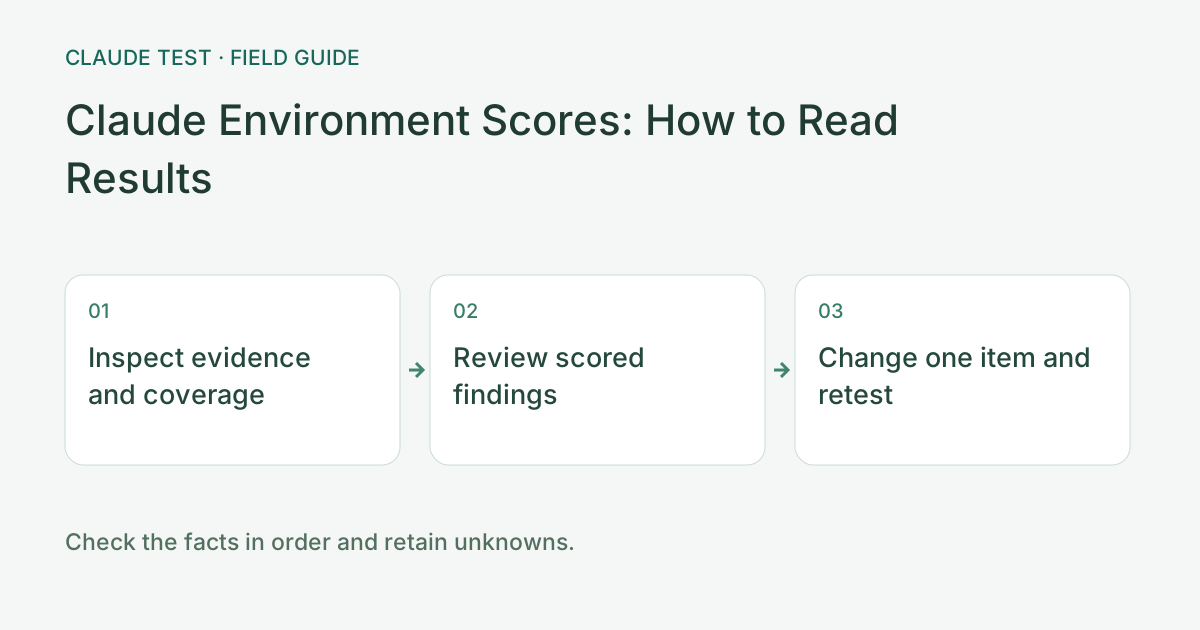
How to Read This Site’s Environment Issue Index
Checks are grouped: TUN and DNS capture use the highest group score, and unsupported-region IP exits add 50 points with regional access findings combined. A changed IP with the same fingerprint adds 5 points. Routing validation and hosting classification remain independent. The total is capped at 100. Different device and exit timezone offsets add 5 points, increased to 10 when a mainland-China timezone or exit region is involved; Chinese and regional signals add 5 points. Version, zoom and ordinary network changes are informational. Unknown and not-applicable checks are counted separately. This is not a ban probability.
Unknown checks are never filled in as passes or penalised for completeness. Confirmed problems show their accumulated score even below 40% coverage. With too little data and no confirmed issue, no index is shown. Unknown items remain separate. Zero means no scored issues among known checks, not account safety or a complete pass.
Use Intelligence for Practical Troubleshooting
If BGP routing differs from your expected carrier, check your split-routing rules; if passive ports appear, check whether you are on a shared proxy gateway. Use signals to guide verification rather than panic.
Common Real-World Scenario
For example, ProxyCheck flags may be false while several RIPE DNSBL lists are still pending. Both states should be shown honestly rather than fabricated into a single percentage score.
References & Freshness
The above is independent diagnostic guidance with no access to Anthropic internal risk controls. Policies, UIs, and support workflows may change—always verify against official effective dates and your account portal.