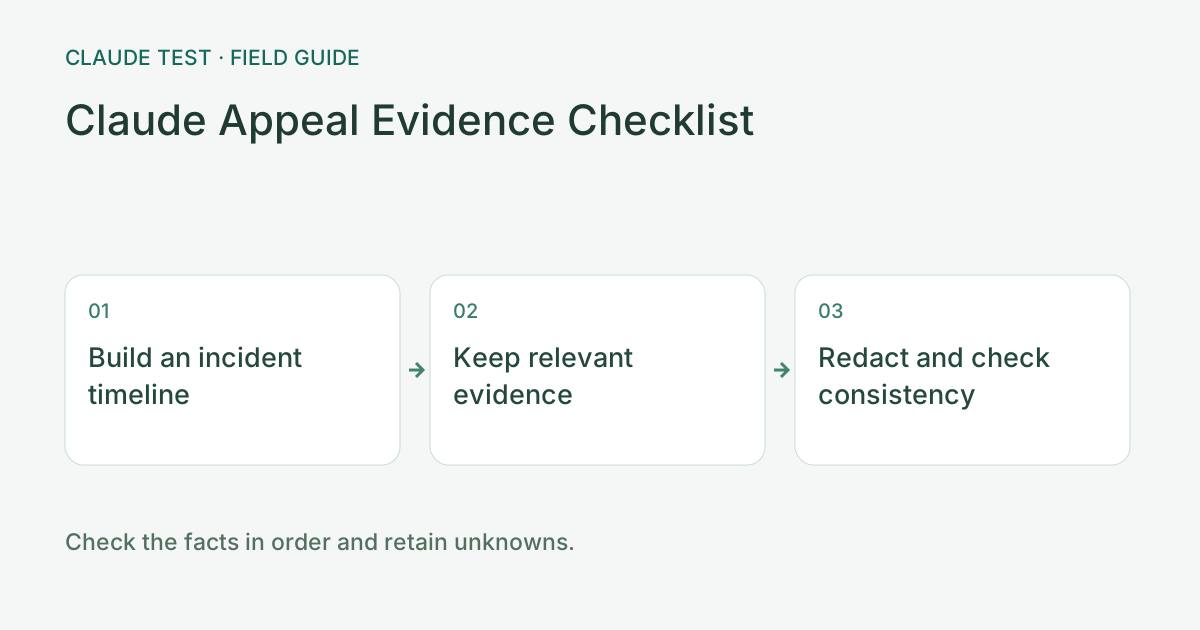
Confirm That the Notice Is an Account Restriction
Preserve the official notice and identify whether it concerns a personal account, organization, or product permission. Usage exhaustion, payment failures, timeouts, and explicit bans require separate workflows. Without a restriction notice, begin with error triage rather than treating a network report as proof of a ban.
Use the applicable entry point linked from the current official restriction and appeals guidance. A third-party diagnostic tool cannot inspect internal review status or certify identity or physical location. Do not give passwords, verification codes, or session cookies to purported unban services.
Prepare Five Categories of Necessary Evidence
Gather the notice, timestamp with timezone, affected product and organization, minimal reproduction, and the specific review you request. Supply account identifiers only where the official form requires them. Include orders or payment evidence only when the issue actually involves billing.
Each attachment should answer a specific question. Full chat histories, software inventories, and many IP screenshots often add irrelevant detail without explaining an internal restriction. Start with the original notice and a concise timeline, then provide additional material when requested.
Write a Timeline That Can Be Matched to Records
Use an explicit timezone and separate the last success, first failure, notice, action taken, and follow-up result. Mark approximate times honestly rather than inventing precision. Ensure screenshot timestamps agree with the written account.
The template below is a structure for verifiable facts. Mark unperformed checks as not checked. Reaching a login page does not mean every function has recovered. For organization restrictions, state the organization scope and involve an authorized administrator through the official process.
Copyable evidence checklist and timeline
Restriction notice: [text or redacted screenshot]
Scope: [personal / organization / product]
Timestamp and timezone: [mark estimates]
Last successful operation: [verified facts]
First failure and exact notice: [verified facts]
Checks performed: [identify unchecked items]
Requested review: [brief description]
Attachments: [name and purpose]
Redact and Verify Before Submitting
Remove passwords, API keys, verification codes, Authorization headers, cookie values, full session links, and unrelated personal data. Preserve enough error text, product context, and timing. Review official submissions separately from any version intended for public forums.
Environment signals are reproducible technical context only. State observed timeouts or errors rather than claiming that a diagnostic score proves regional eligibility. Do not promise, fabricate, or copy another person’s identity or usage history.
Keep the Receipt and Follow Up in the Original Channel
Keep the submission date, channel, ticket number, and official replies. Provide relevant facts when asked for more information. Avoid contradictory repeat submissions, and keep refunds, cancellation, and account appeals as distinct processes.
Official decisions and actual product availability establish recovery. Clear evidence helps communication but guarantees neither reinstatement nor response time. If one network path still fails after recovery, retest the original device and application instead of automatically treating that as an unsuccessful appeal.
References & Freshness
The above is independent diagnostic guidance with no access to Anthropic internal risk controls. Policies, UIs, and support workflows may change—always verify against official effective dates and your account portal.