Define Your Core Workload Requirements First
List your actual requirements—coding, long-context analysis, tool use, latency, and privacy—and benchmark candidates using your own representative tasks.
Verify Regional Availability and Data Retention Policies
Confirm whether the provider officially supports your region and review its data retention and model-training opt-out policies for business data.
Compare Total Cost of Ownership and Rate Tiers
Evaluate context window limits, caching discounts, rate limits, and prompt migration effort alongside per-token pricing.
Pilot With a Small Workload Before Full Migration
Test prompt compatibility and output formatting on a small module first while keeping your existing workflow reproducible.
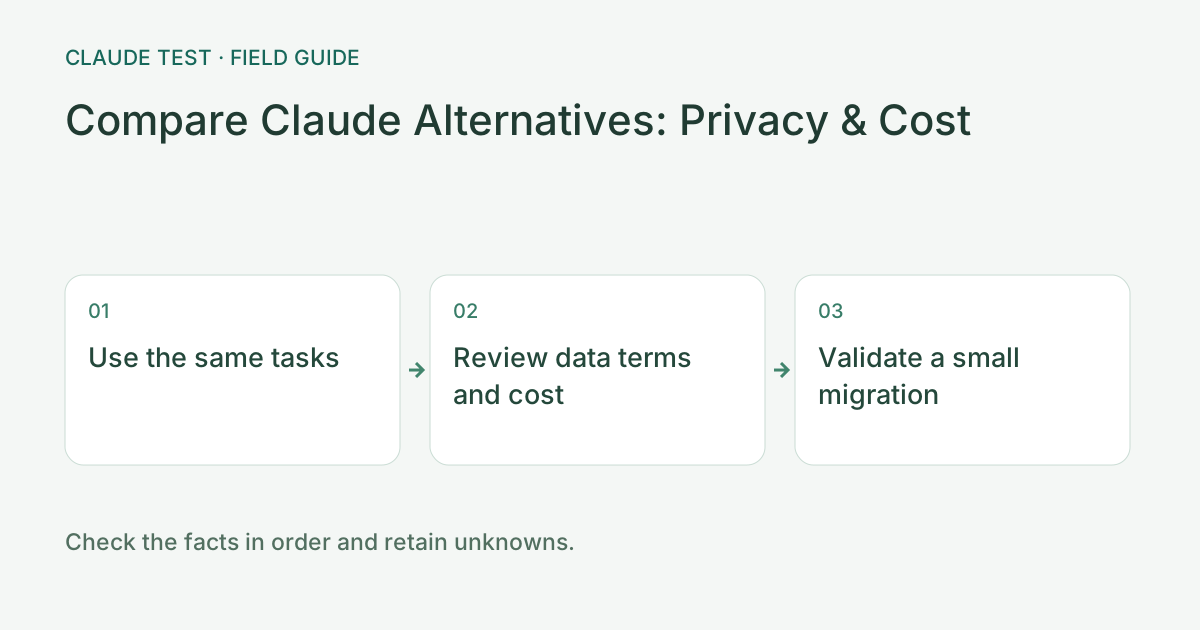
Compare alternatives with the same real tasks
Choose representative tasks, such as reading the same redacted document, editing the same code, or extracting information into one format. Record required features, verifiability, and failure behavior. Do not compare only advertised model names, context sizes, or benchmark numbers without their conditions.
Use non-sensitive samples and review retention, training use, export, and access controls, including organizational requirements where applicable. Account for subscriptions, usage, retries, and human review time. A free trial is not a long-term cost estimate, and an unsubstantiated ban-avoidance probability is not a meaningful comparison metric.
Before migrating, retain exportable material and relevant versions and review prompts, interfaces, file formats, and team permissions. Validate one reversible task before expanding use. State the product version, date, and sample scope. The same model name can have different functionality and terms across providers.
References & Freshness
The above is independent diagnostic guidance with no access to Anthropic internal risk controls. Policies, UIs, and support workflows may change—always verify against official effective dates and your account portal.